
Giveaway running Blackout Lemonaid BX2 Monday, November 30 at 6:00 PM PT Enter →

KNF, and the inputs actually made here

Korean Natural Farming is the root of it all, and Master Cho’s manual is the bible for it. A lot of what’s in there has been evolved and adapted along the way. The honest caveat up front is that the last couple of runs have been water only living soil, because once the soil is dialed in it does the feeding for you.

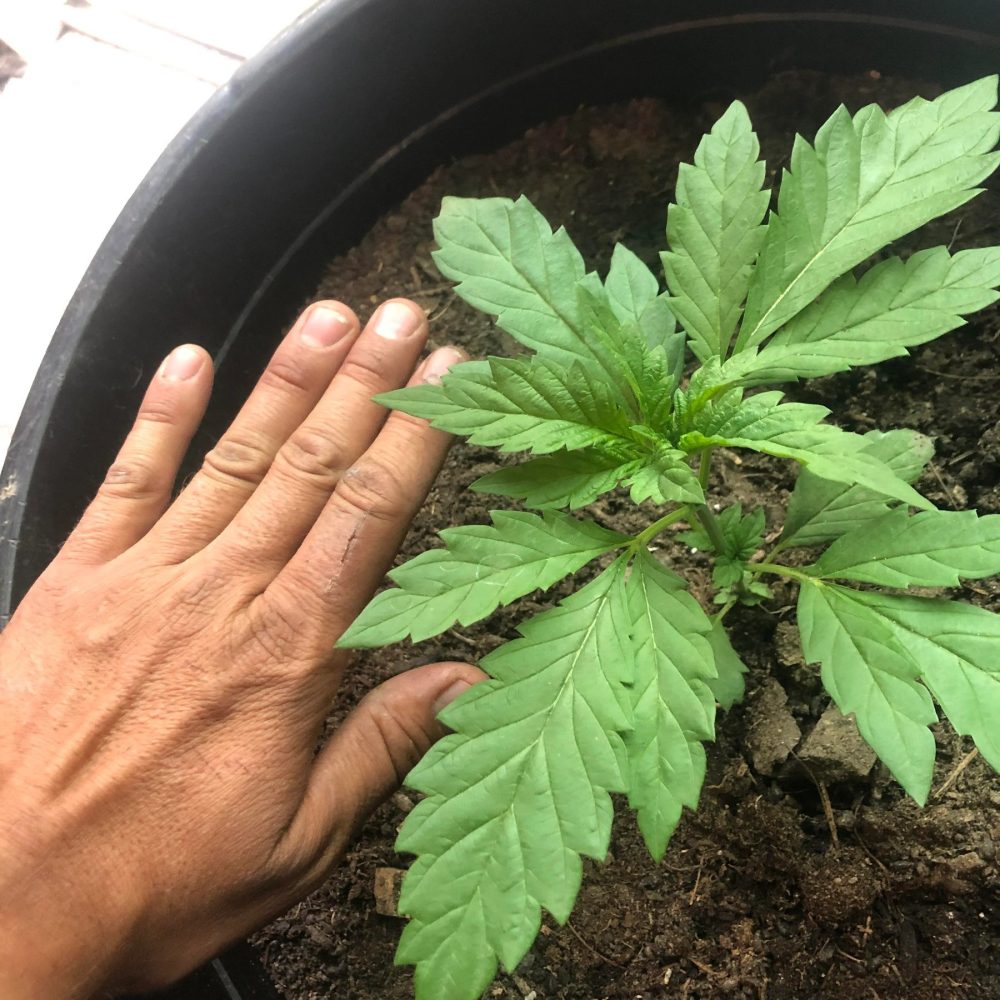
KNF produce happy plants

Why this and not a bottle

The thing that sold me is that you can eat this stuff. The lactic acid bacteria culture separates out into a solid you could put on a cracker, and the official write-ups say so plainly. The herbal nutrient is edible aromatic herbs in alcohol. The calcium is eggshells and vinegar.

That matters more with cannabis than with most crops, because cannabis is a bioaccumulator. It takes up what is in its soil and holds onto it, and then you set fire to it and breathe it in. If I’d eat it, I’m fine feeding it to a plant I’m going to smoke. Simple test, and it rules out a lot.

Where it led, and where things are now

KNF was the schooling. Learning to make the inputs is really learning what a plant wants and when it wants it, and once that lands you stop seeing soil as the thing holding the roots up and start seeing it as the thing doing the work.

Which is why most of the inputs have since been dropped in favor of soil health alone. The mix is an old one that has been evolving for years, with dozens of wild sourced ingredients and whatever amendments made sense at the time. I’m a soil snob about it, and I think the health of that soil is most of why a plant shrugs off pests and stress instead of folding.

None of that’s me talking anyone out of the inputs. They’re very helpful if you’d rather not feed your plants salts, and they earn their keep any time your soil isn’t fully dialed in. Mine took years to get where it is. Until yours does, this is how you feed a plant properly without reaching for a bottle.

I’m fairly inconsistent and I never measure anything, so take this as a freestyle grower using a precise system, not as gospel. The folks doing proper KNF with discipline and real measurement are doing something closer to science than what I do.

Most of it comes off the land

Half the appeal is that the raw material is free if you’re willing to go and get it. I’m always up for a natural harvest, whether it’s wild flora for fermenting or just shit.

Moose droppings get collected. I found bat guano in piles under a bridge on a service road near us, went back with a bucket, a shovel and a respirator, and that went into the soil. Horsetail gets wild harvested for its silica and goes in as a ferment and as a chopped top dress. Clover goes in the same way. Worm castings come out of my own farm.

What you feed your plants is what your plants become.

The recipes.

These are the ones kept going here, in the order to start if you were beginning again. Each one links to the free University of Hawaii publication for it, written with Cho Global Natural Farming Hawaii. Clearest plain English version of Cho’s method I know of. I’ve written the short version here in my own words. Go to the PDFs for the real detail.

LABS

Lactic Acid Bacteria

A culture of lactic acid bacteria, grown out of milk. This is the one that sold me on the whole system, because the solid that separates out is edible, more or less a soft cheese.

How it gets made

  1. Rinse rice and keep the cloudy rinse water. Leave it loosely covered somewhere at room temperature until it sours.
  2. Strain off that soured rinse water and add milk to it at roughly ten parts milk to one part rinse water.
  3. Leave it again until it separates. You get a floating solid mass and a yellow liquid underneath.
  4. The yellow liquid is your culture. Strain it off and keep it. It’s alive, so keep it loosely capped, and refrigerated it holds for months.
Used for
Heavily diluted, as a foliar spray mixed in with a plant nutrient solution, and in composts and compost teas when preparing soil. Easy to overdo, so err light.
My version
The solid gets eaten or fed out rather than thrown away, which still feels like the best advertisement the system has.
Lactic Acid Bacteria, SA-8
FPJ

Fermented Plant Juice

The workhorse. Fast growing plant tips fermented with brown sugar, which pulls the juice out of the plant material and ferments it.

How it gets made

  1. Before sunrise, collect the growing tips of vigorously growing plants. Flowers, buds and immature fruit work too. Woody material doesn’t.
  2. Don’t wash them. The microbes already on the plant are what do the fermenting.
  3. Mix with roughly an equal weight of brown sugar, pack into a jar, cover with breathable cloth.
  4. About a week later, strain off the liquid. That’s your FPJ.
Used for
Diluted heavily as a foliar spray and a soil drench, through veg and into flower. Different plants for different jobs.
My version
Horsetail FPJ is my go-to, for the silica. Clover is the other one I make. I put up a good batch every year and have it on hand when plants look like they want a boost.
Fermented Plant Juice, SA-7
WCA

Water Soluble Calcium

Available calcium made from eggshells and vinegar. Eggshell on its own is calcium carbonate and the plant can’t do much with it. A weak acid converts it into something the plant can actually take up.

How it gets made

  1. Collect eggshells. Peel the inner membrane off.
  2. Crush them and roast over low heat until they’re lightly browned, not burnt.
  3. Drop the roasted shell into brown rice vinegar, about one part shell to ten parts vinegar by weight. It will fizz.
  4. When the fizzing stops it’s done. Strain and store.
Used for
Foliar, very dilute, mixed with FPJ. Calcium is a structure input, so it earns its place later in the run and when leaf eating pests show up and you want harder leaves.
My version
I now add raw organic bone meal to the final vinegar mix, which is my own departure from the book.
Water Soluble Calcium, SA-10
WCAP

Water Soluble Calcium Phosphate

The same idea as WCA, but using bone rather than shell, which brings phosphorus along with the calcium.

How it gets made

  1. Take clean animal bone, strip it of meat, and char it until it’s black through.
  2. Drop the charred bone into brown rice vinegar and leave it to react.
  3. Strain off the liquid when it has stopped working.
Used for
Dilute, foliar, through the transition into flower. This is the structure and flower formation side of the cocktail.
My version
Same tweak as the calcium. Raw organic bone meal goes into the final vinegar mix. In Cho’s manual the calcium recipe starts around page seventy eight and the bone extract follows it.
Natural Farming Hawaii, WCP
FAA

Fish Amino Acid

Fish waste fermented with brown sugar until it breaks down into a nitrogen rich liquid. It’s the fuel input, for pushing growth.

How it gets made

  1. Use fresh fish scraps. Heads, guts, frames, whatever you have.
  2. Layer with roughly an equal weight of brown sugar in a container with room to work.
  3. Cover breathable and leave it for months. It will smell exactly as bad as you expect at first and then settle.
  4. Strain off the liquid.
Used for
Heavily diluted through veg, and sparingly after that. Nitrogen late isn’t your friend.
My version
Mine gets better with age. I’ve fed out fish amino acid that was four years old and the plants ate it up.
Fish Amino Acid, SA-12
IMO

Indigenous Microorganisms

The foundation, and arguably the whole point. You go and collect the microbes already living in healthy ground near you, feed them up, and put them back into your soil. Local microbes, suited to your place.

How it gets made

  1. Set out cooked rice in a wooden box, covered with breathable cloth, somewhere undisturbed in good ground such as under leaf litter in old forest.
  2. Leave it a few days until it has a white fuzzy growth. That’s IMO 1.
  3. Mix that with an equal weight of brown sugar and let it sit. That’s IMO 2.
  4. Mix IMO 2, heavily diluted, into bran and bring it to the right moisture. It heats up as it works. That’s IMO 3.
  5. Mix IMO 3 with soil from your own ground and let it finish. That’s IMO 4, which is what goes out.
Used for
Into the soil before planting, and into compost. This is a soil input rather than a feed.
My version
I lean on this one hardest. Everything out here sits in living soil, and the soil does the feeding.
Indigenous Microorganisms, SA-19
OHN

Oriental Herbal Nutrient

The medicine of the set. Edible aromatic herbs extracted in alcohol and fermented with brown sugar. Garlic, ginger or turmeric, licorice, cinnamon and angelica.

How it gets made

  1. Each herb goes in its own jar, chopped.
  2. Add an equal weight of brown sugar, then top up to about half full with rice wine or beer.
  3. Stir daily. This is the fussiest input of the lot and the one that takes real commitment.
  4. The same material can be extracted several times over before it’s spent. Blend the finished extracts in proportion, with angelica at roughly double the others.
Used for
Very dilute, mixed with FPJ and brown rice vinegar, as a foliar every week and a half or so. It’s there to discourage the anaerobic nasties and favour the aerobic microbes.
My version
Honestly the one I’m least disciplined about. It wants daily attention and I’m a seasonal gardener.
Oriental Herbal Nutrient, SA-11

The manual

If you want the whole system rather than the inputs one at a time, Cho’s Global Natural Farming is the book. It’s the absolute bible for this, and it carries far more than I have listed here, including the fruit ferments, the brown rice vinegar and the seawater input.

I’d say this though. Read it, then go and look at your own ground. Half of what makes this work is that the inputs come from where you’re, and nobody can write that part down for you.

Seed off this work goes out to the list first, along with the giveaways.